Dakota Gasification Company
Headquarters:
1717 East Interstate Avenue | Bismarck, ND 58503-0564 USA
701.223.0441 | 1.800.242.2372
Great Plains Synfuels Plant
420 County Road 26
Beulah, ND 58523-9400 USA
701-873-2100
A subsidiary of:

Last February, two lineworkers from Fergus Electric Cooperative, a Class C member of Basin Electric, traded the wide-open skies of central Montana for the steep canyons and rough trails of Cocalitos, a remote Guatemalan village. Their mission: bring reliable electricity to a community without it.
When the project was announced, Danyon Rice and Darek Dygert chose to put their names forward, joining a team of 14 Montana lineworkers headed for Guatemala. “It was brought to us by our manager, who was looking for lineworkers to volunteer for the trip,” Rice says. “It’s a unique opportunity to be able to travel down there and help people who have never had electricity.”
The project was part of a long-running effort through National Rural Electric Cooperative Association International, the nonprofit arm of America’s electric cooperatives, to bring reliable electricity to rural communities in Guatemala. For more than 30 years, volunteer lineworkers from the United States have helped build and improve power systems, train local crews, and connect villages that have never had electricity.
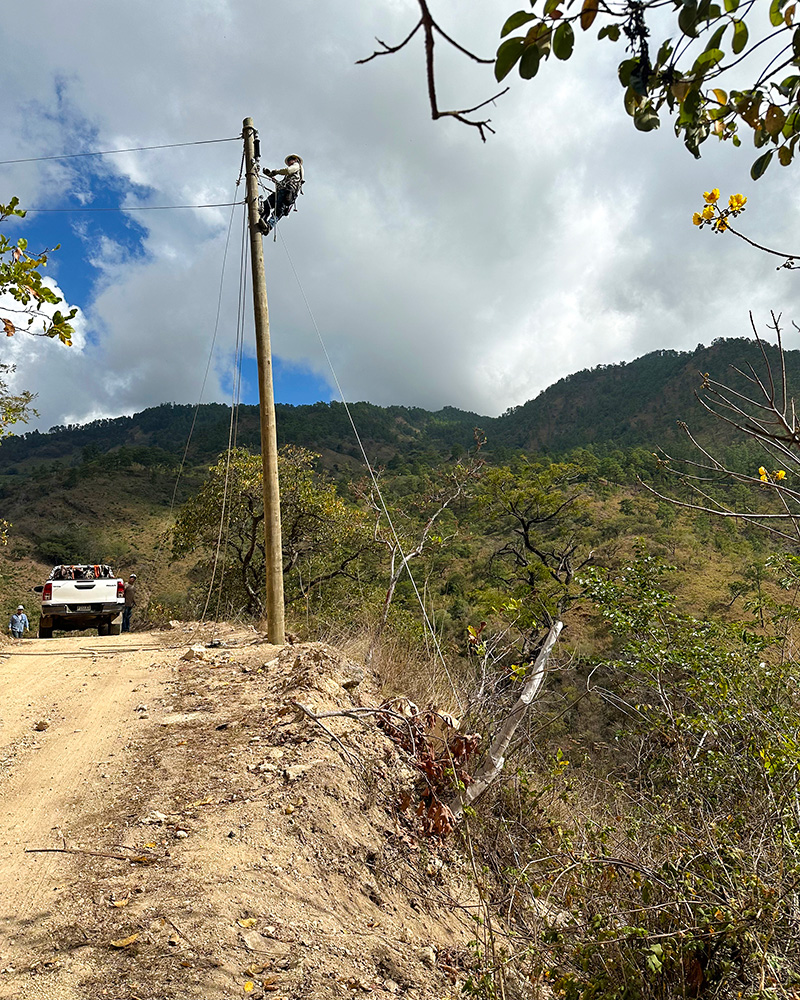
When Rice and Dygert arrived in Cocalitos, the contrast was immediate. “It was quite a culture shock,” Dygert says. Rice saw it the same way. “The lack of infrastructure, from plumbing and traffic laws to even what people ate, surprised me the most,” he says. “It was a whole different world from what we are used to, but everyone there was smiling.”
Geographically, the landscape posed one of the biggest challenges. “The vegetation and terrain were different from what we were used to in Montana,” Dygert recalls. The power line had to climb more than 1,800 feet in elevation, crossing steep, heavily vegetated hillsides with limited access.
Despite the unfamiliar setting, the job was the same: set the pole right, build the line straight, make it safe, and make it last.
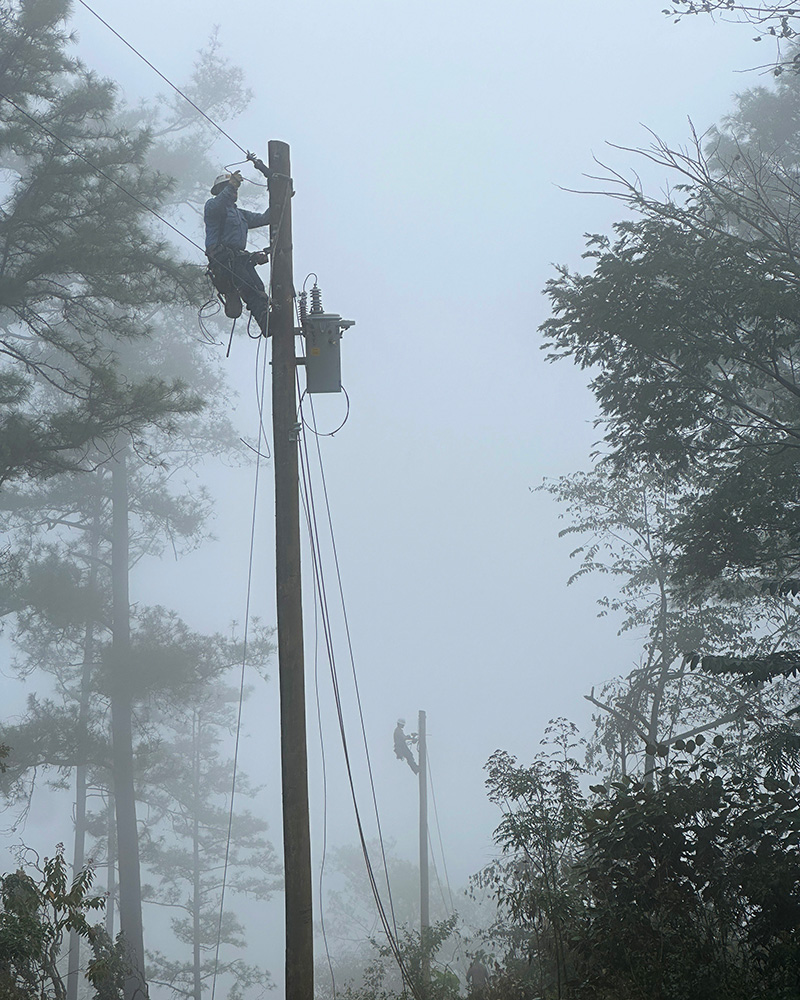
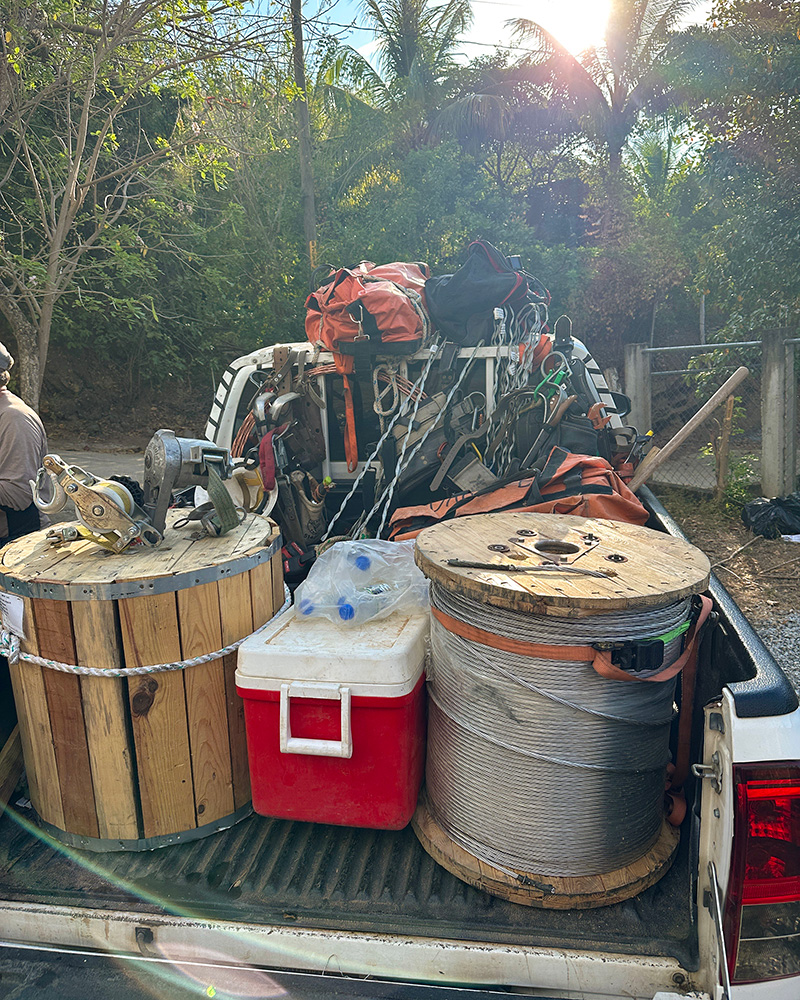
Line construction was done largely by hand, and equipment was limited. Plans changed daily based on weather, terrain, and available materials. When something did not work, solutions came from experience and teamwork.
“There were challenges, but lineworkers are pretty good at figuring out solutions,” Dygert says. “Our group was especially good at problem-solving.”
The crew worked alongside local villagers who helped dig holes, carry materials, and learn basic wiring. Communication was often nonverbal, but cooperation came quickly. “We just had to find other ways to communicate,” Dygert says. “We were able to understand each other pretty well.” Rice adds, “When you want to communicate with people, you always find a way.”
Over ten workdays, the crew accomplished a lot:
When the lights finally came on, the impact was immediate. Roughly 100 people in Cocalitos gained access to electricity, changing daily life and opening new opportunities for work and learning. “It was humbling to see the effect we had on them,” Dygert says. Rice adds that access to electricity will help the village grow, from everyday routines to long-term infrastructure.
For both men, the experience left a lasting impression. “All in all, it was a great experience, and I’m grateful I got to do it,” Dygert says.
The trip reinforced what rural electric cooperatives have always known: strong training, shared values, and a commitment to the work travel anywhere. From Fergus County to a remote village in Guatemala, the same approach applies. Do the job right, take care of people, and leave something that lasts.
Dakota Gasification Company
Headquarters:
1717 East Interstate Avenue | Bismarck, ND 58503-0564 USA
701.223.0441 | 1.800.242.2372
Great Plains Synfuels Plant
420 County Road 26
Beulah, ND 58523-9400 USA
701-873-2100
A subsidiary of:
Basin Electric wants all interested and qualified candidates to apply for employment opportunities. If you are an applicant with a disability who is unable to use our online tools to search and apply for jobs, or who needs other assistance or accommodations, please contact us at 701-223-0441. Please indicate the specifics of the assistance needed or provide your contact information, and a Basin Electric Human Resources representative will contact you. Basin Electric is an Equal Employment Opportunity Employer regarding race, color, religion, sex, sexual orientation, gender identity, national origin, disability, and veterans status.