Dakota Gasification Company
Headquarters:
1717 East Interstate Avenue | Bismarck, ND 58503-0564 USA
701.223.0441 | 1.800.242.2372
Great Plains Synfuels Plant
420 County Road 26
Beulah, ND 58523-9400 USA
701-873-2100
A subsidiary of:

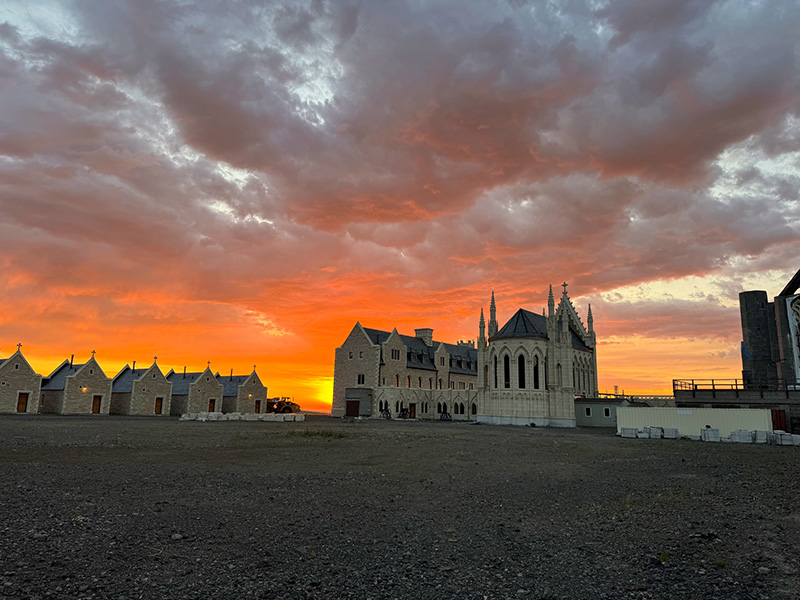
Wyoming: quiet, peaceful, rugged, and beautiful. The perfect place to build the New Mount Carmel Monastery. With its Gothic architecture and stunning detail work, the monastery might seem out of place in the vast wilderness, but it’s not alone. The monastery, spanning 500 acres of a wild and remote valley outside of Meeteetse, keeps company with the wind, the gurgling creek water, and of course, the devoted Carmelite monks who live and work there.
Construction of the monastery began in 2014. Its stones carved by the monks themselves, its design modeled on centuries-old Carmelite tradition, and its progress sustained entirely through prayer, labor, and the generosity of countless strangers. Building a structure meant to last for generations takes not only hard work and patience, but materials to stand the test of time, specifically mortar, and not just any mortar would do.
When the conversation about building a new monastery started, a visiting English stonemason suggested using Roman-style quicklime mortar. Quicklime is highly exothermically reactive with water, the added strength and reduced set times from this reaction make it ideal as a key component in mortar and cement. The self-healing properties of a quicklime mortar also make it stand the test of time.
A University of York professor who happened to be a “mortar guru” from the United Kingdom, confirmed the advice. “Use quicklime; the good stuff is in Frannie, Wyoming.” He was referring to Basin Electric’s subsidiary Wyoming Lime Producers.
The lime plant is located about two hours from the monastery and plays a critical role in its construction.
With recommendation in hand, Brother Joseph, who works as a stonemason on the project, reached out to Wyoming Lime Producers in the spring of 2024 asking for a bucket of quicklime.
Daryl Mecham, senior sales manager at Pete Lien & Sons, which operate Wyoming Lime Producers for Dakota Coal Company, received the call. “I spoke with Daryl who was very, very kind, and he said to swing by and they’d give us some five-gallon buckets,” Brother Joseph says.
When he arrived to pick up his first five-gallon buckets, the staff greeted him warmly, though with understandable caution. Quicklime is notoriously temperamental: highly reactive, scorching hot when slaked, and capable of exploding if mishandled.
With quicklime in hand, Brother Joseph returned to the monastery intent on figuring out how to use it. “I threw on a hazmat suit, face shield, and a respirator. I had no idea what to expect,” he recalls. What came next was dramatic: the reaction shot ten feet into the air like a volcanic geyser. It marked the beginning of a long, careful learning curve.
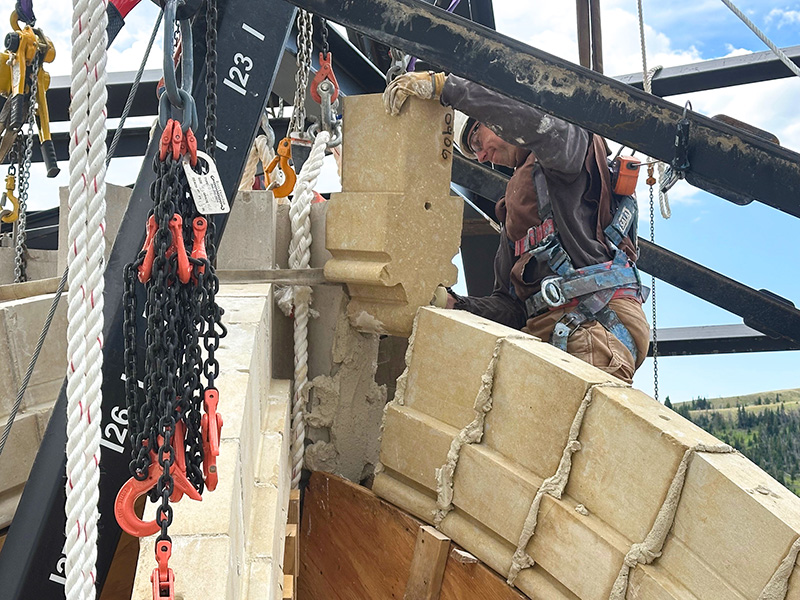
“It’s been a humbling process to learn how to use the quicklime safely and efficiently,” he says. Over time, he and the other monks developed a safe, consistent method to produce the ancient mortar that will bind their monastery together for generations.
What started as a small test, filling a few five-gallon buckets, quickly grew into a larger commitment. Now in its second year of donations, Wyoming Lime Producers has contributed approximately 10 tons of lime to support the monastery’s ongoing construction. Each ton is mixed, slaked, and carefully transformed into a mortar that cures not by water but by air, strengthening for decades.
Brother Joseph, trying to avoid taking advantage of anyone’s generosity, made several attempts to open a payment account with Wyoming Lime Producers. Each time, their response was some version of, “We’ll sort that out later.”
But “later” never came.
Pete Lien & Sons also employs Tucker Green, the plant’s site manager. Behind the scenes, Green quietly advocated for the monastery. He shared the story up the chain, first with leadership at Pete Lien & Sons and eventually with Basin Electric’s Executive Leadership Team and board of directors. Once they heard the story and saw the images, they felt what the employees had already sensed: this wasn’t simply a request for material. It was an opportunity to help build something meaningful.
The donation was approved.
“Supporting this project resonated deeply with the team, not solely because of religious alignment, but also because it represented doing the right thing for the right reasons,” Green says. “The collaboration has been smooth and uplifting, with the monastery coordinating pickups due to limited onsite storage. In return, Wyoming Lime Producers gets to witness the transformation through photos and updates, a reminder of the tangible impact their contribution is making.”
Construction of the chapel, the heart of the monastery, is expected to be completed in the next five to seven years. When finished, it will stand as a rare example of American Gothic stone construction built entirely by hand, by prayer, and by perseverance. Only a few remaining buildings and walkways will follow, completing a project decades in the making.
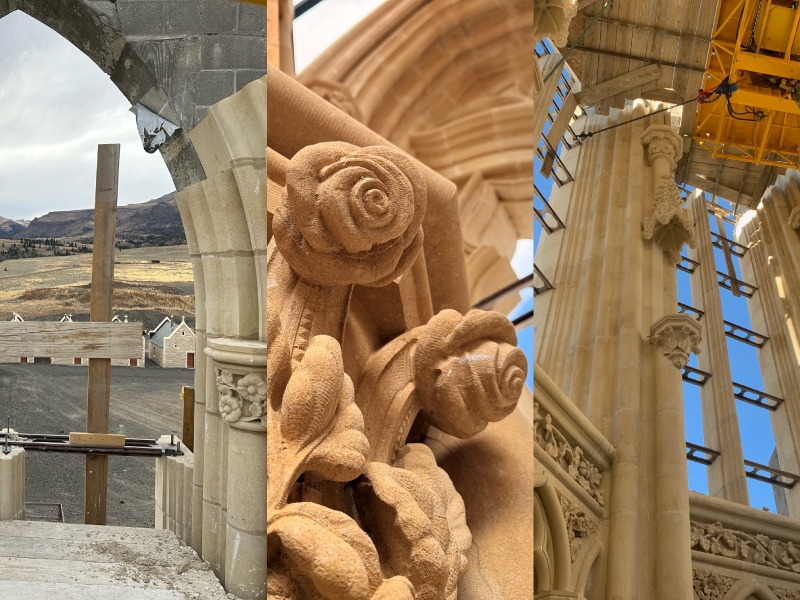
For Wyoming Lime Producers, the donation has become a reminder of what true community development looks like: offering expertise, giving freely, and supporting a cause that builds something far bigger than a single organization.
For the monks, it is a miracle unfolding in slow motion; a monastery, built stone by stone, through God’s providence and the generosity of those moved to say yes.
And for Brother Joseph, it is something simpler still:
“When someone looks you in the eye and offers you the chance to do God’s work, whether you’re a monk or a lime producer, you say yes.”
Photos courtesy of Carmelite monks in residence.
Dakota Gasification Company
Headquarters:
1717 East Interstate Avenue | Bismarck, ND 58503-0564 USA
701.223.0441 | 1.800.242.2372
Great Plains Synfuels Plant
420 County Road 26
Beulah, ND 58523-9400 USA
701-873-2100
A subsidiary of:
Basin Electric wants all interested and qualified candidates to apply for employment opportunities. If you are an applicant with a disability who is unable to use our online tools to search and apply for jobs, or who needs other assistance or accommodations, please contact us at 701-223-0441. Please indicate the specifics of the assistance needed or provide your contact information, and a Basin Electric Human Resources representative will contact you. Basin Electric is an Equal Employment Opportunity Employer regarding race, color, religion, sex, sexual orientation, gender identity, national origin, disability, and veterans status.